

Custom Springs: When Making Them In-House Makes Sense
Custom springs solve problems that standard catalog parts cannot. A spring may need to fit an unusual space, deliver a particular force, replace an obsolete component, or change repeatedly while a product is being developed. In those situations, the usual choice is to send specifications to a custom spring manufacturer.
That remains the right approach for many projects. However, ordering is not the only option. Engineers, repair shops, product developers, and small manufacturers can also form certain custom springs at the workbench. A desktop spring making machine becomes especially useful when the work involves prototypes, repeated adjustments, replacement parts, or small batches.
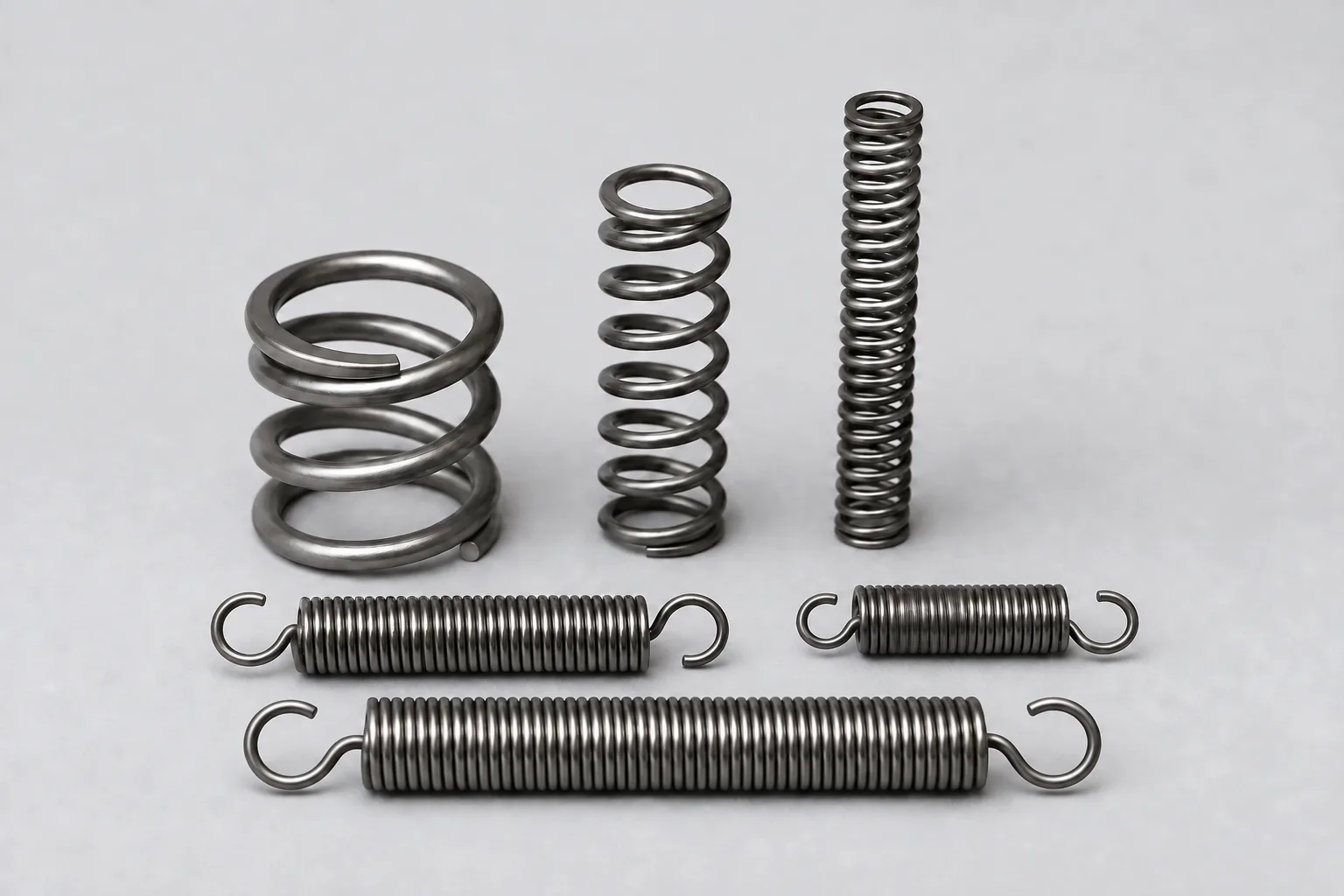
Should You Order Custom Springs or Make Them?
A qualified spring manufacturer brings material expertise, production equipment, inspection systems, and finishing capabilities. Outside production is usually the better choice for high volumes, demanding tolerances, complex end forms, certified materials, or parts that require grinding, heat treatment, coating, or documented testing.
Safety-critical springs also call for specialist engineering and validation. Springs used in brakes, lifting equipment, pressure systems, guards, medical devices, or other applications where failure could cause injury should not be treated as casual shop projects.
Making a spring in-house addresses a different need. It can shorten the feedback loop when a designer needs to try several wire diameters, coil diameters, pitches, or turn counts before settling on a design. A repair operation may need a replacement for a discontinued spring and expect similar jobs in the future. A small manufacturer may need dozens of parts at a time rather than thousands.
The advantage is control over iteration. Instead of submitting a revised drawing and waiting for another outside production cycle, the operator can adjust the forming setup, make another sample, measure it, and test it in the assembly. That does not eliminate the need for sound spring design or testing, but it can make development and low-volume work more responsive.
Where a Desktop Spring Machine Has an Advantage
Hand winding can be reasonable for an occasional thin-wire spring. A jig improves consistency by fixing the mandrel, anchor point, and wire guide. A powered, programmable machine becomes more useful when pitch and turn count must be repeated across multiple parts.
The Krexil desktop CNC Spring Forming Machine is intended for prototypes, repairs, product development, and small-batch work. It forms compression and extension springs and other short helical wire parts. Its published range covers wire from 0.008 to 0.062 inch and springs up to four inches long. The operator programs pitch and turn count, then clips the wire manually after forming.
Those limits make the machine a focused workbench tool rather than a substitute for a full industrial spring plant. It is most useful when the required spring fits its working range and the same development or short-run need occurs often enough to justify a controlled, repeatable setup.
For example, a product developer could form several versions of a compression spring while evaluating fit and travel. A maintenance shop could reproduce a small helical spring used in older equipment, provided the material and performance requirements are understood. A manufacturer could retain direct control over a recurring low-volume part without setting up a large outside order.
Decide Whether the Desktop Approach Fits Your Work
Start with the spring, not the machine. Record the wire material and diameter, inside and outside coil diameters, body length, number of turns, wind direction, end configuration, available travel, and required force. A damaged spring can provide useful dimensions, but wear or permanent deformation may mean that its present shape is not the original design.
The free Krexil Spring Calculator can estimate mandrel size, finished inside and outside diameter, overall length, spring rate, and release turns. These results are estimates, so the formed spring still needs to be measured and tested for its intended application. For material selection, winding procedure, finishing, and safety considerations, also read How to Make a Spring.
Ordering custom springs is still the sensible path when a specialist must certify the material, process, tolerance, or performance. A desktop solution is advantageous when the real constraint is iteration time, recurring short runs, or access to a repeatable forming process at the workbench.
If that describes your workflow, review the current specifications and availability of the Krexil Spring Forming Machine, then use the calculator to compare your proposed spring with the machine's working range.