

A Practical Guide to Using a Roll Cutter
by Jim Lewis - Founder of Krexil
At its heart, a roll cutter is a simple concept: it's a device built to turn rolls of material into perfectly cut sheets. That simple function is the key to efficiency in how dozens of industries get work done.
How a Roll Cutter Transforms Your Workflow
Picture a busy shipping department where every single box needs custom-cut void fill. Or think about a print shop prepping hundreds of film sheets for a project. When you're measuring and cutting each piece by hand, you're guaranteed to get inconsistent sizes, wasted material from bad cuts, and a lot of lost time. A modern roll to sheet cutter is needed.
This guide will break down how this technology delivers speed, precision, and efficiency to professionals in all sorts of fields—from warehouse managers and printers to contractors and even gift shop owners. By converting bulk rolls into ready-to-use sheets right when you need them, these machines become the unsung heroes of a smooth-running operation.
The Problem with Manual Cutting
Relying on old-school methods like scissors or basic paper roll dispensers always introduces one major problem: variability. For a packaging engineer, that means the void fill isn't consistent, which could fail to protect products during shipping. For a painter, it means messy, ragged edges on masking paper that ruin a clean paint line.
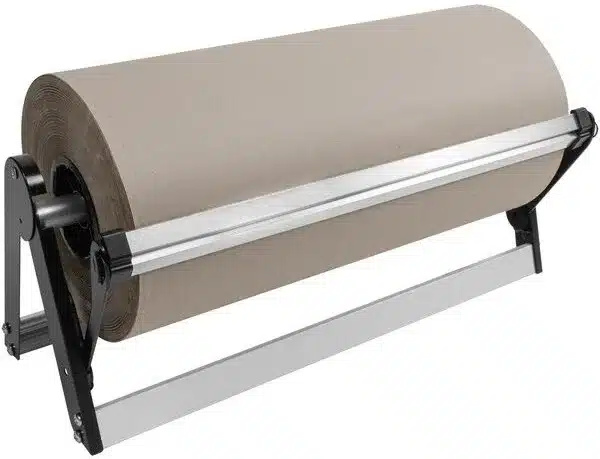
This lack of precision creates a ripple effect that slows down the whole workflow, causing delays and driving up material costs. Every minute your team spends measuring and cutting by hand is a minute they aren't focused on the real work.
A dedicated roll cutter isn't just a tool; it's a process improvement. It standardizes a critical step, ensuring that the first cut of the day is identical to the last, no matter who is operating the machine.
The Automated Solution
An automated roll paper cutter or film cutter gets rid of these headaches by taking human error completely out of the picture. The operator just needs to set the length and quantity they need, and the machine does the rest. The result is a far more predictable and efficient operation.
Just think about the workflow improvements:
- Consistency: A contractor installing window tint can produce dozens of identical film sheets, guaranteeing a proper fit for every single window pane.
- Speed: A butcher can instantly get perfectly sized sheets of wrapping paper during a busy lunch rush, helping them serve customers faster.
- Waste Reduction: An art teacher can prep exact-sized paper for a class project, dramatically cutting down on the amount of scrap material left over.
By bringing roll cutters into your process, your business can shift from a reactive, manual approach to a proactive, automated system. We can help you figure out exactly how this change can benefit your specific operation.
Matching the Cutter to Your Material
Not all roll cutters are created equal. The right machine is always the one engineered for the specific job at hand. Picking the right tool starts with a simple question: what material are you cutting? That single factor dictates the device size you need.
A restaurant owner needing custom-length paper table covers or a warehouse manager creating void fill from kraft paper needs a workhorse. For them, a paper roll cutter is the perfect fit. These machines are built to handle the unique properties of paper-based products, from thick kraft rolls to wax-coated butcher paper, delivering straight cuts without tearing or jamming.
Working with films presents a completely different set of challenges. A print shop owner preparing Direct-to-Film (DFT) transfers or a contractor installing window tint needs a specialized film roll to sheet cutter. These machines are all about precision, capable of slicing materials like PET, BOPP, and mylar without causing scratches, static cling, or deformities.
To make this clearer, let's look at a quick comparison of the different technologies and where they shine.
Paper Roll Cutters for Everyday Operations
For many businesses, paper roll dispensers with a built-in cutting mechanism are the backbone of their daily workflow. You'll find them in environments where speed and reliability are far more critical than microscopic precision. Think of a busy shipping station getting packages out the door or a painting crew masking off a room before they start.
Here are a few scenarios where a paper-focused roll cutter is the go-to tool:
- Shipping and Logistics: Warehouse managers use them to quickly cut kraft paper for dunnage and wrapping, protecting items during transit.
- Food Service: Butchers and deli owners rely on them for dispensing food-grade paper, ensuring a hygienic and efficient process for wrapping products.
- Construction and Painting: Contractors deploy large rolls of protective paper on floors, cutting custom lengths to prevent damage from paint or debris.
- Retail and Gifting: Gift shop owners can pre-cut wrapping paper during peak seasons, speeding up the checkout line and improving the customer experience.
In these roles, the main goal is simple: turn a large, cumbersome roll into manageable sheets with minimal effort and waste.
Film Roll Cutters for Technical Applications
When precision is the top priority, a dedicated film cutter becomes non-negotiable. These machines are designed to handle slick, thin, and often expensive materials that are completely unforgiving of mistakes. A tiny snag or an uneven edge can ruin an entire sheet of window tint or a complex vinyl graphic, costing both time and money.
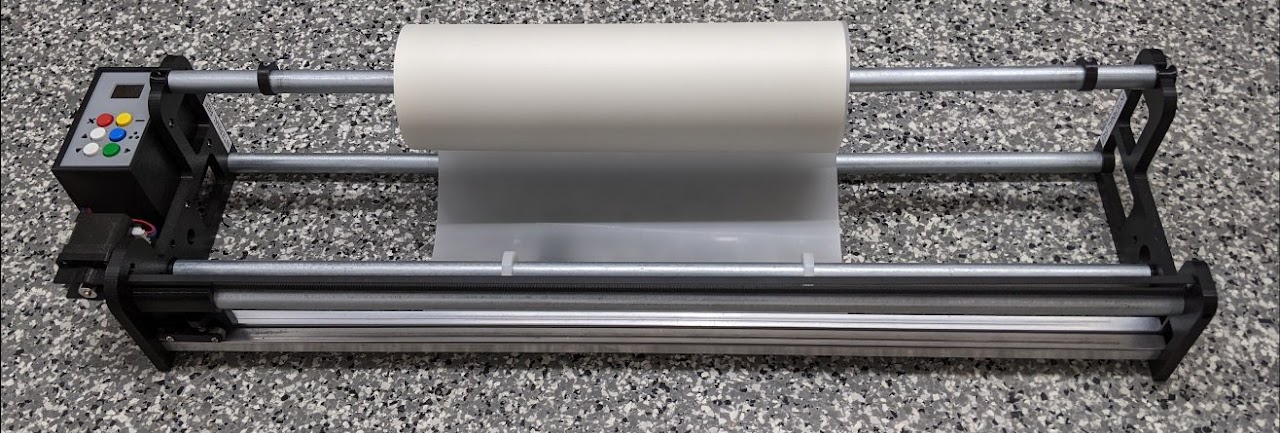
Industries that absolutely depend on these specialized roll cutters include:
- Printing and Signage: Print-on-demand shops use them to prepare DFT and sublimation films, where exact dimensions are crucial for printer alignment.
- Automotive and Construction: Window tint installers need perfectly straight edges to ensure a seamless, bubble-free application.
- Manufacturing and Electronics: In a lab or production setting, these cutters prepare sensitive films for packaging, lamination, or assembly.
Features That Drive Real-World Efficiency
Beyond just cutting material from a roll, the real magic of a modern roll cutter is in the details—the smart features that make a tangible difference on the shop floor. These are the elements that save time, slash material waste, and guarantee consistent quality. It's what turns a simple machine into the heart of an efficient workflow.
Think about it: if you depend on clean, consistent cuts day in and day out, you can't afford to compromise. A dull blade or a wobbly frame leads to ragged edges and wasted material, which defeats the entire purpose. From a small gift shop to an industrial film converter, quality hardware is non-negotiable.
Precision Through Programmability
One of the most powerful features you'll find is the ability to program specific cut lengths and quantities. Imagine you're a packaging engineer who needs 500 sheets of void fill, each 18 inches long. Instead of breaking out the tape measure, you just punch the numbers into the machine and hit start.
This automation delivers two massive wins:
- Accuracy: Every single sheet is cut to the precise length you need. No more human error, no more "close enough."
- Efficiency: The operator can set the machine and move on to other tasks. It's like having an extra pair of hands dedicated to one of the most tedious jobs.
This level of control is a game-changer for any operation that thrives on repeatability. The global roll cutter market, valued at around USD 1.5 billion, is growing precisely because industries like packaging and manufacturing demand this kind of efficiency.
User-Friendly Controls and Adjustability
A powerful machine is useless if your team is afraid to touch it. That's why a simple, intuitive interface is so important. Clear digital displays and straightforward buttons drastically cut down on training time, letting new hires get up to speed in minutes, not days.
Another critical feature? Adjustable speed control. Not all materials are created equal. A thick roll of kraft paper needs a different approach than a delicate PET film.
Adjusting the speed gives an operator the power to fine-tune the machine's performance for the specific material they're running. This ensures a clean slice without causing tears, stretching, or other damage. That kind of adaptability is essential for any business handling a variety of roll stock.
Design Features for a Smoother Workflow
Beyond the cutting blade itself, a handful of thoughtful design elements can make or break your daily productivity. These might seem like small details, but they add up.
- Robust Roll Holders: A steady, secure roll holder is key. It stops the material from shifting around as it feeds, which is a primary cause of angled or uneven cuts.
- Automatic Feeding: Many modern roll to sheet cutter models automatically advance the material after each cut, getting it ready for the next cycle without anyone needing to intervene.
- Durable Construction: A well-built machine with a solid frame can take the abuse of a high-volume workspace, ensuring it runs reliably for years with minimal fuss.
For businesses looking to iron out the kinks in their process, exploring different models of paper roll dispensers and cutters can be eye-opening. When a machine is easy to set up, operate, and maintain, it stops being just a piece of equipment and becomes a reliable partner in building a more productive workflow.
Practical Uses for Roll Paper Dispensers and Cutters
A roll cutter is one of those tools that seems simple until you see it in action. It's not just a piece of equipment; it's a problem-solver that turns clunky, frustrating tasks into smooth, efficient parts of the workday. Let's walk through a few real-world scenarios to see how roll paper dispensers and cutters make a tangible difference.
Picture a boutique gift shop slammed during the holiday rush. Customers are waiting, and every second is precious. Instead of fumbling with a giant, unwieldy roll of wrapping paper for every single item, the owner uses a roll paper cutter to slice dozens of sheets into standard sizes before the doors even open.
This one simple step completely changes the game. When a customer buys something, the employee grabs a perfectly sized sheet and wraps the gift in half the time. There's no awkward tearing, no crooked edges, and far less paper wasted from bad cuts. The entire experience is faster and more polished, which keeps customers happy and employees sane.
Streamlining Work on the Job Site
Now, let's head over to a job site where a painting contractor is prepping a client's home. They need to protect the new hardwood floors, but rolling out heavy kraft paper, wrestling with a tape measure, and trying to get a straight line with a utility knife is a slow, sloppy process that often leaves gaps.
With a portable roll paper dispenser on hand, the crew can roll out and cut perfectly straight sections of protective paper in a fraction of the time. The clean, precise cuts mean the paper lays flat and covers the floor from edge to edge, preventing costly paint splatters and spills. It doesn't just save time; it makes the whole operation look more professional.
The right tool removes friction from a workflow. For a contractor, that means less time spent on prep and more time focused on the skilled work that clients are paying for.
Enhancing Safety and Hygiene in Food Service
Imagine a busy butcher shop right at lunchtime. Here, speed and hygiene are everything. Using a dedicated cutter for food-grade paper isn't just a convenience—it's a critical part of keeping the workspace clean and serving customers quickly.
Instead of touching the entire paper roll with gloves that have just handled raw meat, the butcher can eject a sheet to the perfect length hands-free. This simple action drastically reduces the risk of cross-contamination and ensures every order is wrapped in a fresh, sanitary sheet. The consistent cuts also help control inventory, preventing the waste that comes from using too much paper for each item.
From delis to supermarkets, these roll cutters are essential for any business that handles food. If you're looking for the right setup for your needs, our guide on choosing a paper roll dispenser is a great place to start.
Fostering Creativity in the Classroom
Finally, think about an art teacher prepping for a class of 30 students. Cutting individual sheets of paper by hand is a monotonous, time-sucking chore that steals from valuable instruction time.
With a roll to sheet cutter in the art room, the teacher can knock out uniform sheets for the entire class in just a few minutes. It ensures every student gets the same size canvas to work on, and it cuts down on waste significantly.
This kind of efficiency frees the teacher up to actually teach and engage with the students, making the classroom a far more creative and productive space. In every one of these examples, the roll cutter proves it's more than just a tool—it's a catalyst for working smarter, faster, and more professionally.
Advanced Applications in Film and Foil Cutting
In specialized fields like commercial printing, automotive customization, and even laboratory research, "good enough" doesn't cut it. Precision isn't just a nice-to-have; it's the entire game. For these industries, a generic cutting tool simply won't do. This is where a dedicated film roll to sheet cutter becomes an absolute necessity, handling delicate and often expensive materials with the accuracy required to prevent costly mistakes.
Think about the fast-paced world of a print-on-demand shop. When you're preparing Direct-to-Film (DFT) or sublimation films, every single sheet needs to be cut to the exact dimensions the printer is expecting. Even a small deviation can lead to misalignments, ghosting, or other print defects that ruin the final product and toss valuable film in the trash. An automated roll cutter takes that risk off the table by producing perfectly uniform sheets, time after time.
Precision for High-Stakes Materials
The stakes are just as high for a contractor installing window tint or solar films. One bad cut can turn a large, expensive piece of film into scrap. Cutting these materials by hand is not only slow but also notoriously prone to error, which leads to wavy edges or incorrect sizes that show up later as bubbles and peeling.
An automated film cutter guarantees every piece is perfectly straight and dimensionally accurate. This doesn't just improve the quality of the final installation—it dramatically speeds up the entire prep process. To really understand the challenges involved, you can check out our guide on window film installation, which drives home why that level of precision is so critical.
For professionals working with industrial films, the machine's ability to cut accurately and quickly is paramount. A clean cut is a non-negotiable part of the job.
Handling a Wide Range of Industrial Films
The true versatility of a specialized film roll cutter shines when you see the diverse array of materials it can manage. A lab manager prepping sensitive laboratory films faces a similar challenge to a sign maker working with reflective vinyl: the material's surface has to stay absolutely pristine.
A high-quality machine can process numerous industrial films with consistent, flawless results:
- PET (Polyethylene Terephthalate): Used in packaging and specialty printing, this material demands clean edges.
- BOPP (Biaxially-Oriented Polypropylene): Common in labeling and food packaging, this film is sensitive to stretching.
- PVC (Polyvinyl Chloride): Often used for signage and graphics, where a perfect surface is essential.
- Mylar and Reflective Vinyl: These materials show every tiny scratch, making careful handling crucial.
For any business where material integrity and dimensional accuracy are key, investing in the right equipment is a strategic move. It transforms the workflow from a manual, unpredictable process into a reliable and highly efficient system. By making sure every sheet is cut perfectly, a film roll to sheet cutter protects your investment in expensive materials and helps you deliver a professional-quality product, every single time.
Everything You Need to Know About Paper Roll Cutting
A Guide to the Modern Roll Cutting Machine
A Guide to Cutting Roll Paper Efficiently
Your Guide to 24-Inch Kraft Paper Rolls
How to Select the Right Roll Cutter
Investing in a new piece of equipment is a big deal, even if it's a desktop-sized machine. The key to making the right choice isn't just about finding the most advanced model; it's about making a clear-eyed assessment of your workflow right now and where you see it going in the future.
Think of it this way: you're matching the machine's capabilities to your real-world operational demands. Before you even start looking at spec sheets, take a minute to answer a few questions about your process. Your answers will be your roadmap, helping you zero in on a machine that will actually pay for itself.
Defining Your Material Requirements
First things first: what are you cutting? This is easily the most important factor. A roll paper cutter built for lightweight kraft paper is going to choke on thick, industrial film, and a heavy-duty machine is overkill for delicate gift wrap.
Start by getting specific about your material's properties:
- What's the widest roll you'll ever need to cut? You want a machine that can comfortably handle your maximum roll width. For most folks, this lands somewhere between 12 and 24 inches.
- How thick does it get? A cutter designed for thin gift wrap simply won't have the muscle or blade clearance for something like heavy-duty floor protection paper.
Nailing down these answers from the get-go keeps you from wasting money on paper roll dispensers or cutters that just aren't cut out for the job.
Assessing Your Production Volume
Next up, be honest about how much you'll actually use this machine. Your output volume is what will tell you whether a basic manual dispenser is good enough or if you need an automated roll to sheet cutter.
Think about your daily workload. A small gift shop might only make a few dozen cuts per day, while a busy shipping department could need hundreds or even thousands of sheets.
Ask yourself, "Realistically, how many cuts are we making per shift?" If that number is high, features like programmable batch cutting and automatic feeding quickly go from "nice-to-have" to "essential."
Evaluating Your Workspace and Workflow
Finally, let's get practical. Where is this machine going to live, and who is going to use it?
You need to make sure you have the physical space not just for the machine itself, but for staging the material rolls. Then, think about the people who will be operating it. A machine with a simple, intuitive interface means less training time and empowers anyone on your team to step in and use it with confidence.
By thinking through these three areas—your materials, your volume, and your workspace—you can confidently pick the right roll cutters to tighten up your workflow, slash waste, and get back valuable time. When you're ready to start exploring your options, our team is here to help you find the perfect fit.
Frequently Asked Questions About Roll Cutters
Even after seeing all the benefits, it's natural to have a few practical questions before bringing in a new piece of equipment. Here are some of the most common things we hear from warehouse managers, printers, and shop owners when they're looking at a roll cutter.
What Is the Difference Between a Roll Cutter and a Dispenser?
It's really about the difference between a simple tool and a complete system. Think of a basic paper roll dispenser as just a holder for the roll, maybe with a manual tear-off bar you'd see at a butcher shop. It helps you manage the roll, but that's about it.
A roll cutter, especially an automated roll to sheet cutter, is a much smarter machine. It doesn't just hold the roll; it precisely measures and cuts the material into perfectly uniform sheets, to the exact length and quantity you need. One just holds the material, the other automates the work.
Can One Machine Cut Both Paper and Film?
Paper and film behave very differently when you try to cut them but our roll cutters are built to handle the stiffness and texture of paper or film in one unit.
Is There a Lot of Maintenance Involved?
Not at all. The maintenance is pretty straightforward, and a little bit goes a long way. The biggest thing is making sure the blade stays sharp for crisp, consistent cuts.
Here's a quick rundown of key maintenance steps:
- Regular Cleaning: Give the rollers and surfaces a quick wipe-down with a dry cloth to keep dust and bits of material from building up.
- Blade Care: Check the cutting blade every so often to see if it's still sharp. If you notice the cuts aren't as clean as they used to be, it's time for a replacement. A sharp blade is everything for a professional finish.
- Inspect Rollers: Make sure the pinch rollers that feed the material are clean and properly aligned. This prevents the material from wandering off-track during a cut.
A well-maintained machine is a reliable one. Just a few minutes of preventative care each week will keep your roll cutter performing day in and day out, protecting your investment and the quality of your work. This simple routine is the best way to prevent miscuts and make the equipment last for years.
At Krexil, we build machines that are reliable and easy to use, designed to improve your workflow without any fuss. Take a look at our range of cutters and find the right solution for your business at Krexil.