

A Guide to Cutting Roll Paper Efficiently
by Jim Lewis - Founder of Krexil
In many businesses, cutting materials from a roll is a routine part of the day. But relying on a manual dispenser (or even scissors) often leads to inconsistent sheet sizes and a surprising amount of material waste. For a warehouse manager or a print shop owner, this manual process can become a bottleneck, especially when the operation depends on converting large rolls into ready-to-use sheets.
This guide is for professionals like shipping managers, gift shop owners, printers, and contractors looking for practical ways to improve their workflow. We'll focus on how an economical automated roll-to-sheet cutter can save time, reduce waste, and bring consistency to your daily tasks, from commercial gift wrapping to prepping film for window tint installation.
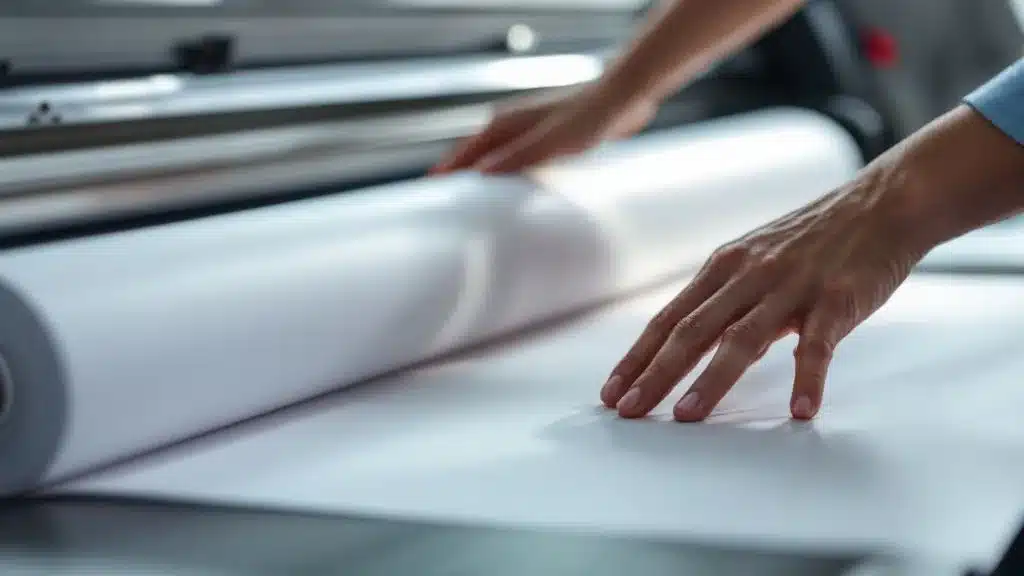
Why Manual Cutting Is Holding You Back
If you're a packaging engineer, a gift shop owner, or a contractor, you know the frustration of cutting roll paper by simple roll dispensers. The process introduces guesswork and inefficiency. All that time spent measuring each sheet adds up, pulling people away from more valuable work.
Picture a busy shipping department. Every box needs void fill, but when you're tearing paper by hand, you may use too much or not enough to protect the product. In a print shop—one skewed cut on a roll of DTF film can compromise a print job. For a painter, inconsistent lengths of floor covering paper create gaps and slow down prep time.
Manual cutting isn't just slow; it creates unpredictable results that can impact your material costs and product quality. Shifting to a more controlled process is a direct investment in consistency and operational efficiency.
Common Issues with Manual Methods
For professionals working hands-on every day, the challenges of manual cutting are clear:
- Inconsistent Lengths: Sheets cut by hand are rarely uniform. This can be a problem for any task that demands precision, such as restaurant table covers, pre-cut liners for animal cages, or sheets for a printing process.
- Material Waste: Crooked or mismeasured cuts lead directly to discarded material. Over time, that adds up to a tangible loss, whether it’s kraft paper for wrapping products or expensive film for window tinting.
- Reduced Productivity: The stop-and-start nature of manual cutting is inefficient. An automated roll-to-sheet cutter turns that multi-step process into a single, smooth action, improving workflow.
By moving past these frustrations, businesses can tighten up their operations and get more value out of every roll. If you're looking to refine your process, exploring a dedicated cutter might be a smart next step.
Your First Steps to a Perfect Cut
Getting new equipment running shouldn't be a chore. The point is to make your job easier, starting with a quick setup. Let's walk through the first steps to get your roll cutter dialed in for clean, repeatable cuts right out of the box.
First, you need to load your material correctly. Whether you're working with a heavy roll of kraft paper for dunnage or a roll of PP film for laser cutting, proper alignment is essential. Make sure the roll is seated snugly and feeds straight. A crooked roll is a common cause of skewed cuts and wasted material.
With the roll in place, it’s time to tell the machine what to do. You only need to input two numbers to get the machine cutting automatically:
- Sheet Length: How long you need each piece to be.
- Quantity: How many of those sheets you want it to cut.
That’s it. The machine takes it from there, turning a bulky 12 to 72 inch wide roll into right sized sheets.
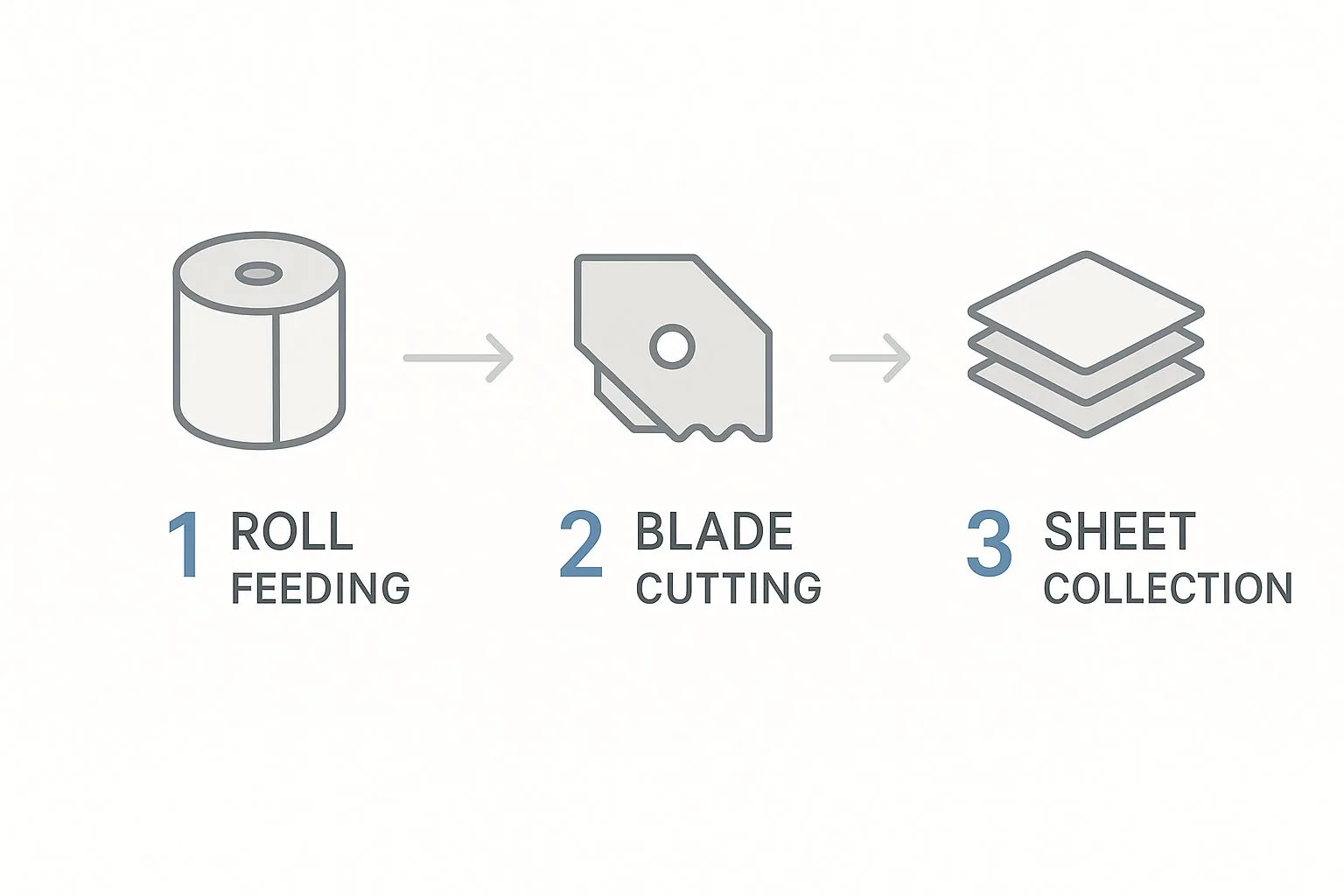
This process is designed to be quick and intuitive, letting the machine handle the tedious work so your team can focus on the bigger picture.
Achieving Precision from the Start
We designed this setup to be so straightforward that anyone can master it in minutes. An art teacher who needs 50 identical sheets of craft paper for a classroom project can load the roll, punch in the numbers, and be ready for a class in minutes.
Or consider a packaging engineer in a busy fulfillment center. They can program the cutter for a specific void fill length, ensuring every packer uses a controlled amount of material.
The goal is to move from setup to production in minutes. By focusing on correct roll alignment and accurate programming, you ensure every cut is as clean and precise as the last, saving time and materials.
Nailing these fundamentals sets a reliable baseline for every cutting job. If you want to take a closer look at the type of machine we're discussing, you can find details on our versatile Krexil roll cutter product page.
Adapting Your Workflow for Different Materials
Not all materials behave the same way. Sheeting 24-inch kraft paper for void fill is a different task than cutting 12-inch wide sublimation film for a print-on-demand shop.
For a shipping manager, speed is critical. They can set a roll-to-sheet cutter to batch-cut hundreds of dunnage paper sheets to a consistent length. This creates a ready supply of void fill, helping the packing line move smoothly, especially during peak seasons. The same principle applies to butchers using paper to wrap food or restaurants preparing table covers.
Tailoring Cuts for Specific Industries
The applications are diverse, showing how one machine can serve many different roles. To get a closer look at one of the most common materials we see, check out our guide on using kraft paper for packaging.
Every industry has unique demands for materials, and a roll-to-sheet cutter can be a versatile tool in many different hands. Here's a quick look at how various professionals put it to work.
Material Cutting Applications by Industry
| Job Role | Material Example | Primary Application |
|---|---|---|
| Printers & Sign Shops | DTF film, vinyl, or PET film | Pre-cutting media to precise sizes for digital printers or plotters. |
| Warehouse & Shipping Manager | Dunnage Paper | Creating consistent void-fill sheets to improve packing workflow. |
| Window Tint Installer | Solar or Privacy Film | Prepping film sections off-site to reduce installation time and waste. |
| Contractor & Painter | Masking Paper / Floor Covering | Cutting protective coverings to length for painting or construction projects. |
| Gift Shop Owner | Specialty Gift Wrap | Producing perfectly sized sheets for high-volume, professional wrapping. |
As you can see, the core function—cutting a roll into sheets—solves a wide range of practical problems, from logistics and manufacturing to custom creative work.
Keep Your Machine Reliable with Simple Maintenance
The best way to keep your roll paper cutter operating smoothly is with simple, routine care. A few minutes of attention can prevent interruptions and ensure every cut stays clean and precise. These habits pay off in the long run.
Just focus on two key areas:
- Check the Blade: Periodically, give the cutting blade a quick inspection for any signs of dullness or nicks. A sharp blade is crucial for a clean, burr-free edge, especially when working with films like mylar, PET, or PP.
- Clean the Rollers: Make sure the feed rollers are free of dust and debris. Clean rollers grip the material properly, which prevents it from slipping or tracking crooked—a common cause of inaccurate sheet lengths.
It’s these small, consistent actions that elevate a good workflow into a great one. They allow you to get the full value out of your equipment.
A More Organized and Productive Environment
Taking a look at how Krexil's paper roll cutters could fit into your specific workflow is a great first step toward boosting your own efficiency.
Common Questions About Cutting Roll Paper
When looking to bring a new piece of equipment into your shop, you're going to have questions. Professionals need to know exactly how a roll-to-sheet cutter will fit into their existing workflow, what it can handle, and how it compares to other machinery.
Let's get into the practical answers to the questions we hear most often.
Can This Machine Cut Materials Other Than Paper?
Yes, absolutely. While our cutters are excellent with paper, we designed them to be versatile. They handle a wide range of films—such as PET, BOPP, PE, PVC, PP, mylar, sublimation film, and DTF film.
This makes the machine a workhorse for many businesses, from a print-on-demand shop running DTF film to a lab manager cutting specialty films. It is important to note that these machines are not designed for flimsy materials like cloth or tissue paper that lack rigidity.
How Does a Roll Cutter Help Reduce Material Waste?
It all comes down to precision. When cutting by hand with a utility knife, it’s easy to make a slightly angled cut or be off in your measurement. Over a full roll, those small errors add up to discarded sheets.
An automated cutter removes that human error from the equation. You tell the machine the exact length you need, and it delivers a straight, clean cut every time. That consistency means you can get the maximum number of usable sheets from every roll, which helps manage your material costs.
Is a Roll to Sheet Cutter the Same as a Slitter?
No, they perform two completely different jobs. This is a common point of confusion, but the difference is simple.
- Our machine is a roll-to-sheet cutter. It makes cross-cuts across the width of the material (from 12 to 24 inches wide). Its job is to turn one long roll into a stack of individual sheets.
- A slitting machine cuts a roll lengthwise. Its purpose is to take one wide roll and turn it into several narrower rolls.
Our equipment doesn’t do slitting. Its focus is on converting your rolls into controlled sized sheets as efficiently as possible.
Ready to see how a dedicated cutter can sharpen your workflow and help manage waste? Explore the versatile solutions Krexil offers and find the right fit for your operation. Learn more at Krexil.