

Your Guide to a Modern Saw Measuring System

Why Precise Measurement Is Non-Negotiable
Every shop manager or contractor knows that sinking feeling. You pick up a freshly cut piece—bar stock, a wood plank, a rigid tube—only to find it’s a hair too short. That one tiny mistake often sends the whole piece, and the money you spent on it, straight to the scrap bin. It's a small error with a financial sting. A bad cut doesn’t just waste material; it throws a wrench in your workflow, causing delays and adding labor costs you didn't plan for.The True Impact of Cutting Errors
When your cuts are off, the pain ripples through your operation. For a contractor framing a house or a machine manufacturer, one short piece can bring a fast moving process to a screeching halt. The real costs of these mistakes are often hidden, going beyond the price of the material itself:- Wasted Labor: Time spent measuring again, cutting again, and fixing mistakes is time that could have been spent making money.
- Reduced Throughput: Every scrapped part is a step backward in your production schedule, making it harder to hit deadlines.
- Inconsistent Quality: Your customers expect every part to be the same. Inaccurate cuts can ruin the look and function of the final product.
Comparing Manual Saw Stops
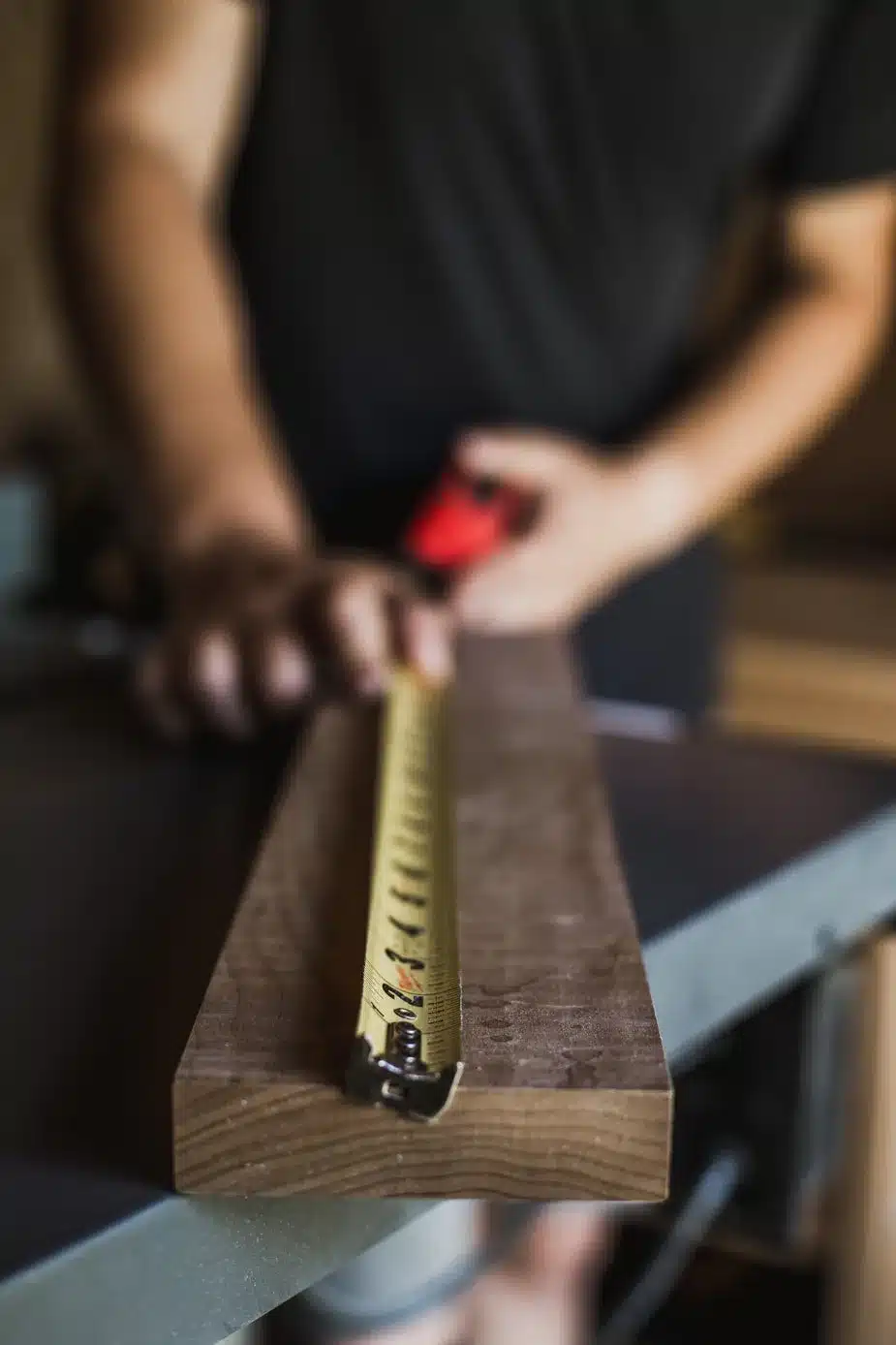
For decades, operators have gotten by with a whole range of manual and mechanical methods to control length. These are the tried-and-true workhorses of fabrication, each one striking a different balance between simplicity, cost, and precision. The most basic approach is as simple as it sounds: a tape measure and a C-clamp holding a block of wood to the saw's fence. If you're just making a one-off cut, it's passable and doesn't require any special gear. But its reliability is entirely in the hands of the operator. A tiny misread of the tape or a block that shifts under pressure can turn a good piece of material into scrap in an instant.Evolving Past the Basics
As shops start looking for more consistency, they usually graduate to more refined mechanical systems. These are a big step up from a simple clamped block, giving you better repeatability and a more structured workflow. Here are a couple of popular options you'll see out there:- T-Track and Flip Stops: This system uses an aluminum track with a "T-slot" that's built into the saw's fence. A movable stop slides along this track and locks down wherever you need it. The "flip" part lets you move the stop out of the way without losing your spot, which is handy for making intermediate trim cuts.
- Engraved Rulers and Sliding Stops: A lot of commercial miter saw stands and aftermarket fences come with a measuring tape or an engraved scale built right in. A dedicated sliding stop rides along this fence for quick adjustments. It’s a common setup for contractors and in woodworking shops.
The Professional Custom-Engraved Backstop
While electronic systems have their place, many shops require the reliability of a physical scale without the complexity of motors and control panels. The modern professional solution is a Custom-Engraved Manual Backstop. It functions as a permanent ruler tailored to your specific workflow.How it Works
Let's look at the three key parts.-
The Custom Scale (The Brain): Unlike a standard ruler, this is CNC laser-engraved onto anodized aluminum. You specify the units (inch, metric, or both) and the exact subdivisions (1/10, 1/16 or 1/32 inch, metric or both) that your shop actually uses.
-
Unique Labels (The Memory): You provide specific measurements tailored to your workflow. For example, if you frequently cut 1.25" tubes to length 18.3", there will be a special tick mark at that exact spot on the scale with a label "1.25" tube" — directly on the rail. This eliminates the need for operators to look up measurements on a cut list, reduces human error and saves time.
-
Precision Lock (The Muscle): A heavy-duty sliding stop with a flip-lock lever. Once set, it provides a rigid, unmoving reference point, ensuring the 100th cut is identical to the first. And unlike many mechanisms, it won't move as you flip the lock.
These three parts create a system that takes all the guesswork out of the equation. For a shop manager who needs to cut different lengths, this means near zero setup time between each unique cut.
Ready to stop guessing and start cutting with precision? At Krexil, we build user-friendly backstops that bring efficiency and accuracy to shops just like yours. See how our systems can slash waste and save valuable time by checking out our solutions at Krexil.