

How to Choose a Film and Paper Roll-to-Sheet Cutter
by Jim Lewis - Founder of Krexil
Features, Accuracy, Pricing, and What to Look For
Businesses that work with rolls of paper or film often need clean, repeatable sheet cuts. Manual cutting is slow, inconsistent, and wastes material. A roll-to-sheet cutter solves this by delivering accurate, repeatable sheets with far less labor.
This guide explains the key features, specifications, price ranges, and buying considerations—so you can choose the right machine for your operation.
1. What a Roll-to-Sheet Cutter Does
A roll-to-sheet cutter feeds material from a roll, measures it to a set length, and cuts precise sheets. It eliminates uneven cuts, crooked edges, and manual measuring.
Typical users include:
- Packaging and fulfillment shops
- Small manufacturers and R&D labs
- Print, art, architecture, and drafting studios
- Sign and graphics shops
- Small businesses converting protective films or tracing paper
- Art class instructors
Most machines handle paper, kraft, tracing paper, release liners, plastic film, poly film, and similar flexible materials.
2. Standard Capabilities & Specifications to Compare
Understanding specifications helps you separate hobby-grade tools from real production equipment.
Supported Roll Widths
Common ranges:
- 6–12 in (compact)
- 12–24 in (general-purpose)
- 24–36 in (wide-format)
Choose based on your most common roll width.
Max Roll Diameter
Larger rolls reduce changeovers.
Typical ranges: 6–16 in on desktop units, 17+ in for industrial units.
Material Compatibility
Look for a machine that supports:
- Paper (bond, kraft, tracing, vellum)
- Film (poly, protective film, laminates)
- Light specialty materials
Accuracy & Repeatability
Industrial or near-industrial cutters should offer:
- ±1 mm to ±1/32 in repeatability
- Rigid rails
- Stable dual-motor or servo feeding
Cutting Mechanism
Common approaches:
- Rotary blade
- Guillotine blade
- CNC-driven adjustable blade (higher precision)
Feed System
A stronger indicator of quality than blade type:
- Dual stepper-motor drive or servo feed → consistent length accuracy
- Non-slip rollers or guide rails → square cuts
Controls
Look for:
- Length setting
- Batch count
- Speed
- Delay / acceleration
- Saved presets
Usability matters more than advanced software.
3. Types of Roll-to-Sheet Cutters
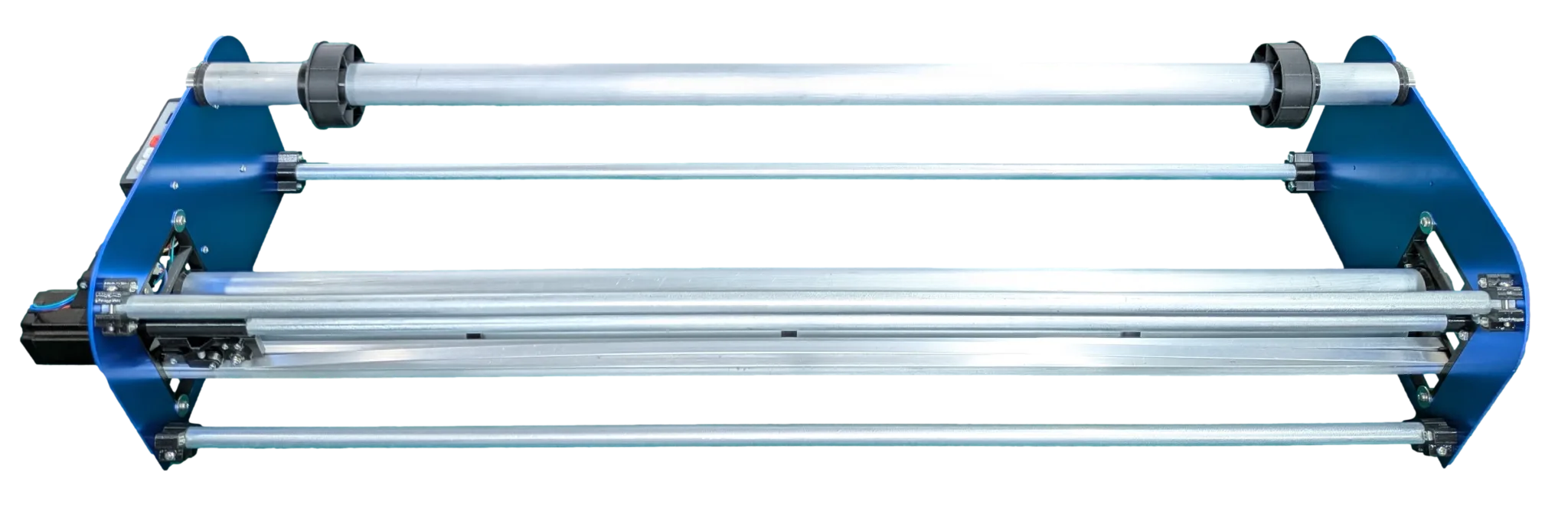
Desktop Cutters (5–200 sheets/day)
Best for:
- Small packaging companies
- Prototype labs
- Art and drafting studios
- Light manufacturing
Pros: low cost, small footprint, fast setup.
Industrial Systems (200–5,000+ sheets/day)
Designed for:
- High-throughput packaging
- Continuous-duty cutting
- Heavy rolls and wide materials
Pros: very high speed, large capacity
Cons: cost, maintenance, commercial footprint.
If you’re not a factory, a desktop machine typically offers better ROI.
4. How to Compare Machines (What Actually Matters)
Precision & Repeatability
The most important metric. Poor repeatability causes stacking issues, waste, and product rejects.
Build Quality
Look for:
- Steel or aluminum rails
- Stable frame
- Quality bearings
- Non-slip feed system
Avoid machines with excessive flex or plastic feed rails.
Maintenance
Higher-end machines often require:
- Lubrication
- Blade changes
- Calibration
Desktop cutters should need minimal upkeep.
Electrical & Noise
Small businesses often prefer low-noise units that run on standard outlets.
5. Pricing & ROI
Desktop Units
Typical price range: $700–$2,500
Used by small manufacturers and packaging shops.
Industrial Units
Typical price range: $5,000–$40,000+
Used when throughput or material volume is very high.
ROI Considerations
A roll-to-sheet cutter pays for itself if you’re manually:
- measuring sheets
- trimming edges
- cutting rolls with a straightedge
- wasting material due to uneven cuts
Even at modest daily output, labor savings alone justify automation.
6. Where to Buy (US Market Overview)
Direct From Manufacturer
Often the best option for:
- Support
- Replacement parts
- Warranty clarity
- Clear documentation
Industrial Distributors
Good if you already buy packaging equipment through a vendor.
Specialty Packaging Suppliers
Some carry sheet-cutting tools, though selection varies.
Regardless of source, verify:
- warranty terms
- support availability
- parts lead time
- return policy
- expected delivery schedule
7. User Reviews & Real-World Feedback
Across the industry, users typically value:
- consistency of sheet length
- reduction in manual labor
- ability to cut both paper and film
- compact desktop footprint
- lower waste from inaccurate manual cutting
Common complaints with low-end machines:
- slipping rollers
- crooked cuts
- poor accuracy over long batches
- inconsistent handling of thin film
Reviews matter most when they mention precision, repeatability, and ease of use—these directly correlate with real-world performance.
8. Frequently Asked Questions
What accuracy is good for packaging applications?
±1 mm to ±1/32 in is typical for professional work.
Do wide-format cutters reduce accuracy?
Not inherently, but the frame must be rigid.
What defines an “industrial” cutter?
Duty cycle, throughput, and ability to handle heavy or wide rolls.
9. Summary
When choosing a film or paper roll-to-sheet cutter, focus on:
- Accuracy & repeatability
- Material compatibility
- Build quality & rigidity
- Usability of controls
- Price vs. actual daily output
These factors determine whether a machine will deliver reliable, precise sheets without constant adjustment.